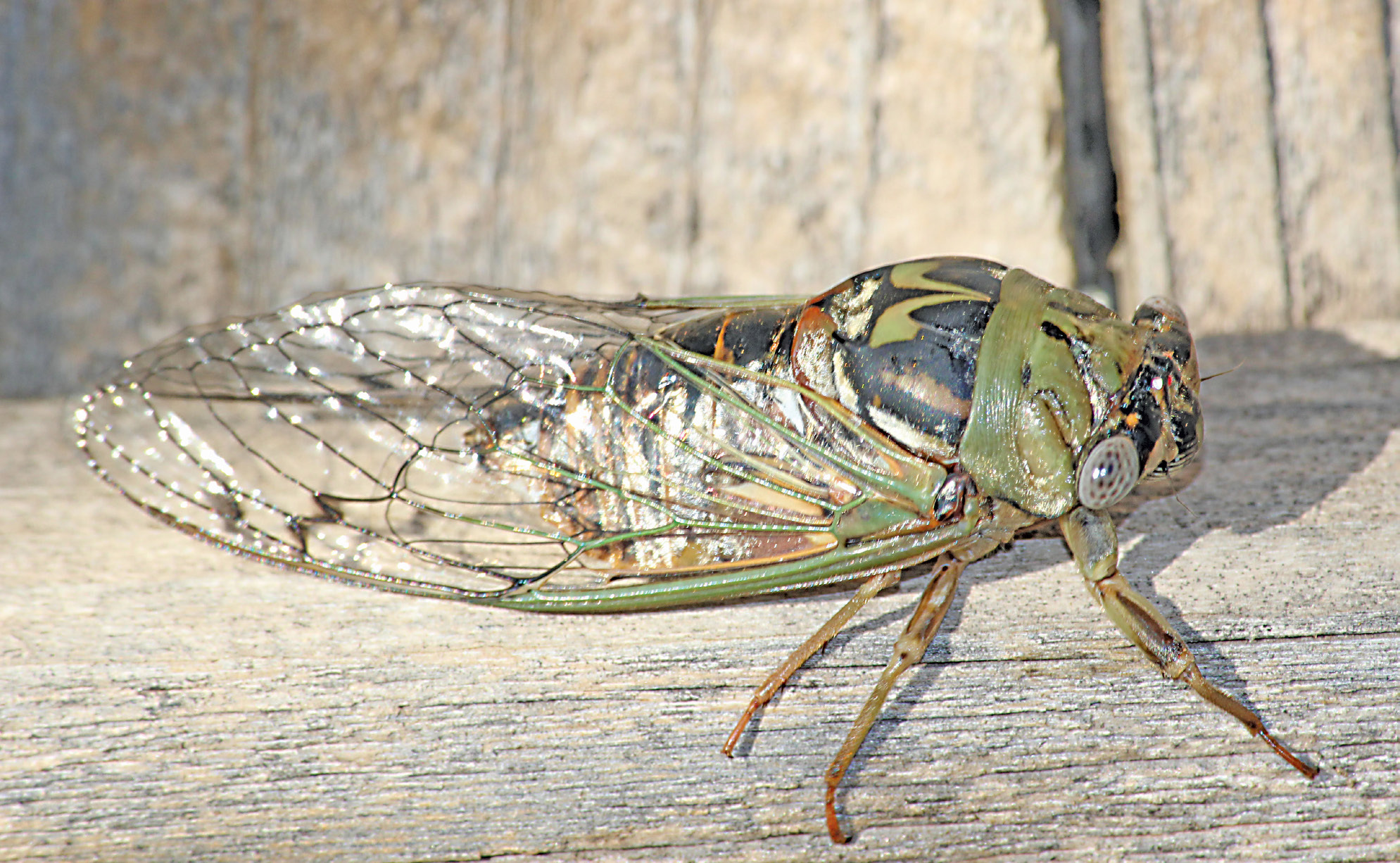
Ahhh, summer is here. The sights are here, the smells are here, the heat is definitely here, and a familiar sound has arrived. Summer in Texas announces its arrival with an insect songster that has a unique life history many people will find intriguing.
One species or another of the cicada (family Cicadidae) is found throughout North America, including at least six kinds in Texas. While some of these varieties have minute differences from each other and others have obviously different characteristics, they all have several things in common that can be used to describe them.
Cicadas (often misnamed as locusts) are insects, and like others of this group, they have three body parts: the head, the thorax and the abdomen. Each of these body parts has a specific purpose, with the head being where the eyes and feeding appendages are located, the thorax where the legs and wings are attached and the abdomen where the majority of the internal organs are housed. Additionally, like other insects, the skeletal structure is on the outside of their body. This structure is known as the exoskeleton. They have six legs, as well as two pairs of wings that are utilized for flight. The body size ranges from just over one-half inch in one endemic species to more than 2 inches in another. The clear wings are about 20% longer than the body. The eyes are located on each side of the head, and cicadas are known to have particularly good vision.
Cicadas are well known for their noise-making capabilities, and this sound production is utilized either for defense or, more commonly, for attracting a mate. Males are the songsters, often carrying on incessantly while perched on the side of a tree, usually during the hottest part of the day. The females are silent, incapable of producing the songs the males perform. These rhythmic songs are one way to differentiate one species from the next and are performed by males to attract females. A secondary use for this sound is self-defense. When a cicada is captured by a bird, it emits a high-pitched shrill, and occasionally this startles the predator enough to open its beak, allowing the insect to fly away to safety.
Cicadas have a very unique life cycle. After mating, the female cicada lays her eggs along tree branches.
After fulfilling her reproductive duties, she dies. Upon hatching, the young, known as nymphs, drop from the tree limbs to the ground below, where they bury themselves. They develop underground, drinking liquids from roots. The time frame for this development varies by species, but regardless of the kind, time is the issue. Some species develop quickly, taking only three years to reach maturity. Other kinds can take longer, up to 17 years in one species. After this period of development, the nymphs dig to the surface, usually at night, leaving hollow black holes in the ground from which they came. They then find a tree or other structure to dig their enlarged front claws into, split open the back of their temporary exoskeleton and emerge as winged adults. The wings are wet upon this “hatching,” and it can take several hours for them to dry enough for flight. The life cycle then repeats itself.
So, the next time you see a strange, empty exoskeleton left on a tree or a house, allow your mind to imagine the time frame of this development. The insect that left it might have lived longer than some of the momentous occasions we celebrate in our lives.