The Spanish Mission in Jackson County
For years, historians debated the locations of La Salle’s Fort St. Louis and the later Presidio La Bahía, along with its mission, Nuestra Señora del Espíritu Santo de Zúñiga. Archaeological work from 1996 to 2002 finally confirmed that both Fort St. Louis and the presidio stood on the west side of Garcitas Creek in present-day Victoria County. The mission’s location, however, remained uncertain. Two granite historical markers—one at St. Agnes Catholic Church in Edna and another in Inez at FM 444 and US 59— reference the mission, but neither identifies its exact site.
In 1721, thirty-two years after the Karankawa destroyed the French settlement at Fort St.
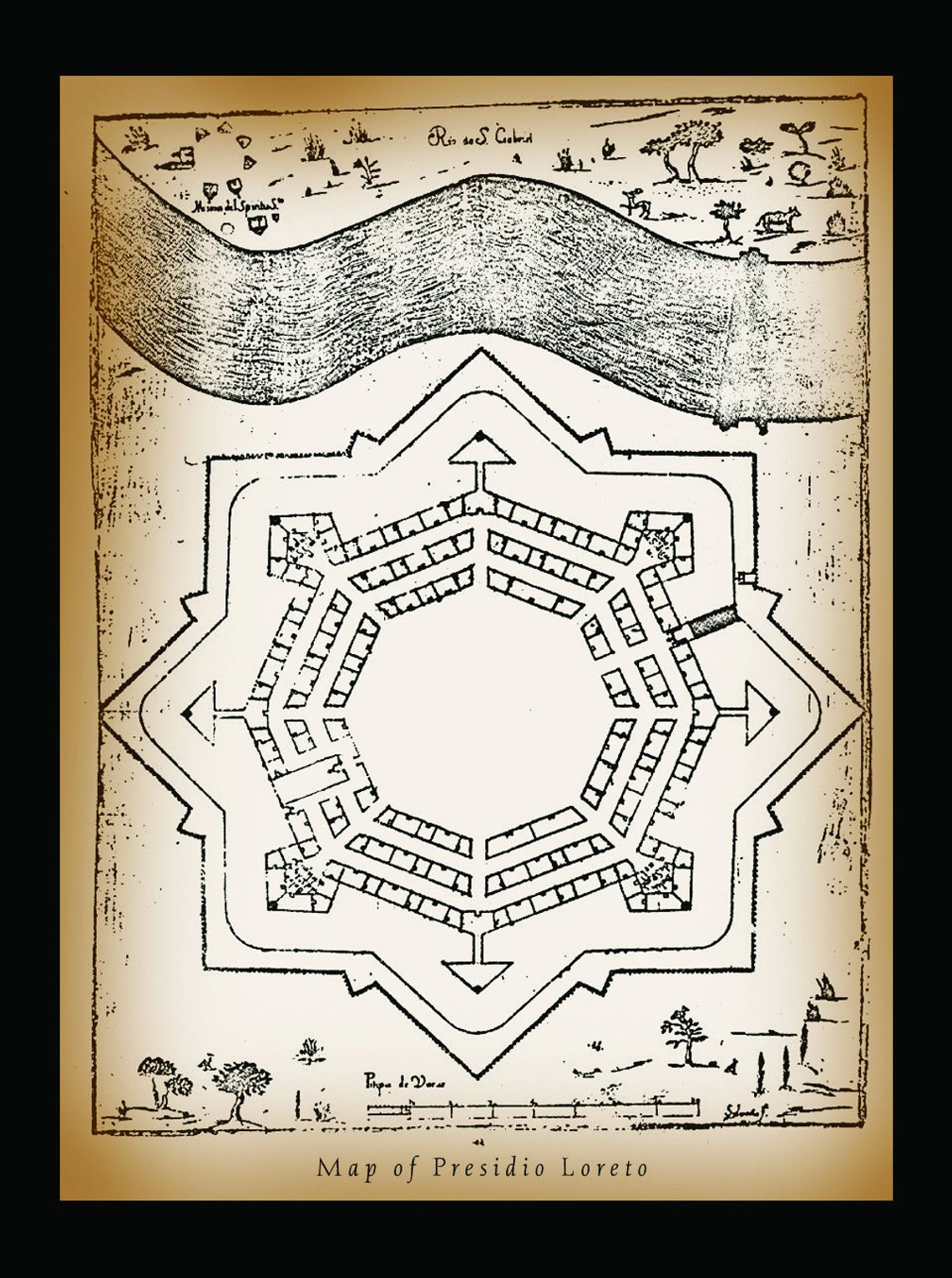
Louis, the Spanish returned. They built a presidio directly atop the French fort and established a mission across Garcitas Creek. Spanish archives include a sketch showing the presidio on the west bank and the mission on the east, consistent with the Spanish practice of placing missions and presidios on opposite sides of a waterway.
However, because the map was not drawn to scale, the mission’s precise location in Jackson County remained unknown until recently.
About twenty-four years ago, near the end of excavations at Fort St. Louis/Presidio La Bahía, archaeologists briefly surveyed the opposite side of Garcitas Creek.
Marshland prevented them from searching directly across from the presidio, so they explored upstream. One of the few artifacts recovered was a lead musket ball, which sat unexamined for two decades.
In 2024, researchers analyzed the musket ball’s lead signature and discovered it matched lead from the presidio— an encouraging clue.
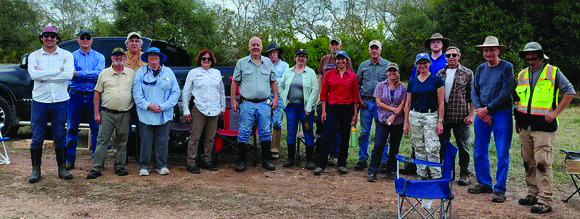
Building on that finding, archaeologists from Texas Tech University and the Texas Historical Commission, assisted by local Archeological Stewards, conducted a more extensive survey in December 2025.
They uncovered brass trade rings, additional lead, and Aboriginal ceramic sherds—clear evidence of both Native and European habitation. The ceramics were especially significant: they matched pottery made by the Karankawa, the mission’s intended converts, and such sherds typically appear only at habitation sites.
In February 2026, the team returned to investigate the December “hot spots” and conducted a magnetometer survey.
The results confirmed a concentrated pattern of missionera artifacts.
Based on these findings, a larger excavation is planned for next fall.
Earlier local histories, such as The Cavalcade of Jackson County, list three missions in the county: Mission Fort St. Louis (1685), Mission Nuestra Señora de Loreto (1722), and Mission Espíritu Santo de Zúñiga (1726). We now know the first two were not missions and were located in what is now Victoria County.
The third, however, was a true mission—and it stood on the east side of Garcitas Creek in Jackson County. Its stay was brief: conflict between presidio soldiers and the native population led to its relocation in 1725 to Tonkawa Bluff (now Riverside Park in Victoria), where the Spanish worked with less resistant tribes.