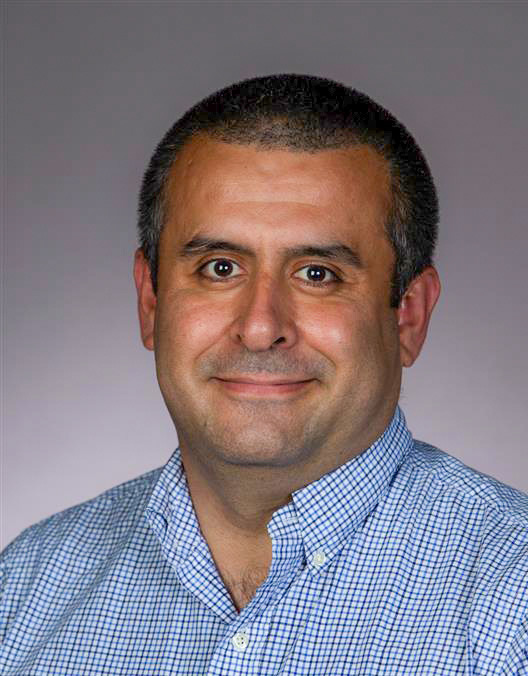
Dimitrov to lead Texas A&M Veterinary Medical Diagnostic Laboratory
Effective Jan. 1, The Texas A&M University System Board of Regents has named Kiril Dimitrov, DVM, Ph.D., director of the Texas A&M Veterinary Medical Diagnostic Laboratory, TVMDL, following the retirement of Amy Swinford, DVM, from the position.
Dimitrov joined the agency in 2019 as head of the virology and molecular diagnostics section at TVMDL’s Amarillo lab. The following year he moved to the Bryan-College Station lab to lead its virology section. In 2021, he was promoted to assistant agency director for microbiology and research, and in 2025 to associate agency director.
“Dr. Dimitrov’s appointment as director marks an exciting new chapter for TVMDL. His leadership and scientific expertise have been vital to our mission, especially during critical moments for Texas animal health,” said Jeffrey W. Savell, Ph.D., vice chancellor and dean for Agriculture and Life Sciences. “We also extend our sincere thanks to Dr.
Amy Swinford for her dedicated service and lasting impact on Texas A&M AgriLife and on Texas.”
Enabling COVID-19 diagnostics
In 2020, TVMDL partnered with human healthcare providers to allow them to use the agency’s equipment and expertise to expand their COVID-19 testing capacity – marking the first time TVMDL had a direct impact on human diagnostics.
Dimitrov’s contributions were crucial in making the partnership successful. He was instrumental in implementing the polymerase chain reaction, PCR, testing process at the Amarillo lab and training a regional human healthcare provider’s staff to perform testing.
The partnership increased capacity for human COVID-19 testing in Texas, an effort that directly impacted the health of thousands of Texans and the welfare of their families and businesses.
Diagnosing an evolving disease
In the years since joining TVMDL, Dimitrov has been lauded for his case coordination skills, and his technical expertise has given him an international reputation. As an active participant on national committees and working groups, he has frequently consulted with other diagnostic labs on research and testing projects.
These skills were exemplified in 2024, when dairies in the Texas Panhandle began to report sick cows with similar clinical signs. TVMDL, as well as other diagnostic labs, began to receive samples from dairies desperate to determine the cause of their cows’ illness. Dimitrov represented TVMDL among several working groups and eventually was part of the core group of scientists who identified highly pathogenic avian influenza, HPAI, in the dairy cattle. Since the initial detections, Dimitrov has been generous in contributing to the knowledge base of this evolving disease.
Decades-long commitment to veterinary medicine
In 2005, Dimitrov earned his master’s and Doctor of Veterinary Medicine degrees from Trakia University in Stara Zagora, Bulgaria. After graduation, he trained at various agencies specializing in food safety, avian disease diagnostics and molecular diagnostics of livestock diseases, before continuing his education.
In 2013, he earned a doctorate from the National Diagnostic and Research Veterinary Medicine Institute in Sofia, Bulgaria. There, his research focused on etiological and molecular-epidemiological studies of Newcastle disease.
Dimitrov came to TVMDL from the U.S. National Poultry Research Center of the U.S. Department of Agriculture, USDA, Agricultural Research Service in Athens, Georgia, where he served as a visiting scientist.
While at USDA, Dimitrov worked on the development of rapid diagnostic methods that reflect the constant, continuous changes in the genetic makeup of virulent avian viruses and on the characterization of their pathogenicity. He also researched viral molecular epidemiology and evolution and has been extensively working on third- and fourth-generation sequencing methodologies and related bioinformatics.
At TVMDL, he remains active in research. One of his major research projects is to mitigate risks certain diseases pose to the cattle industry by developing technologies to detect diseases before outbreaks occur or become widespread.
He co-leads the $1 million project with Diego Diel, DVM, Ph.D., associate professor at Cornell University’s Animal Health Diagnostic Center. The project is in collaboration with the National Animal Health Laboratory Network and the Plum Island Animal Disease Center, and funded by the USDA National Institute of Food and Agriculture.
Dimitrov also leads or co-leads over $1 million in projects aimed at protecting the poultry industry through enhanced testing methods and innovative technologies.
For more information on TVMDL, visit tvmdl.tamu.edu or call the agency’s full-service laboratories in Bryan-College Station or Canyon.